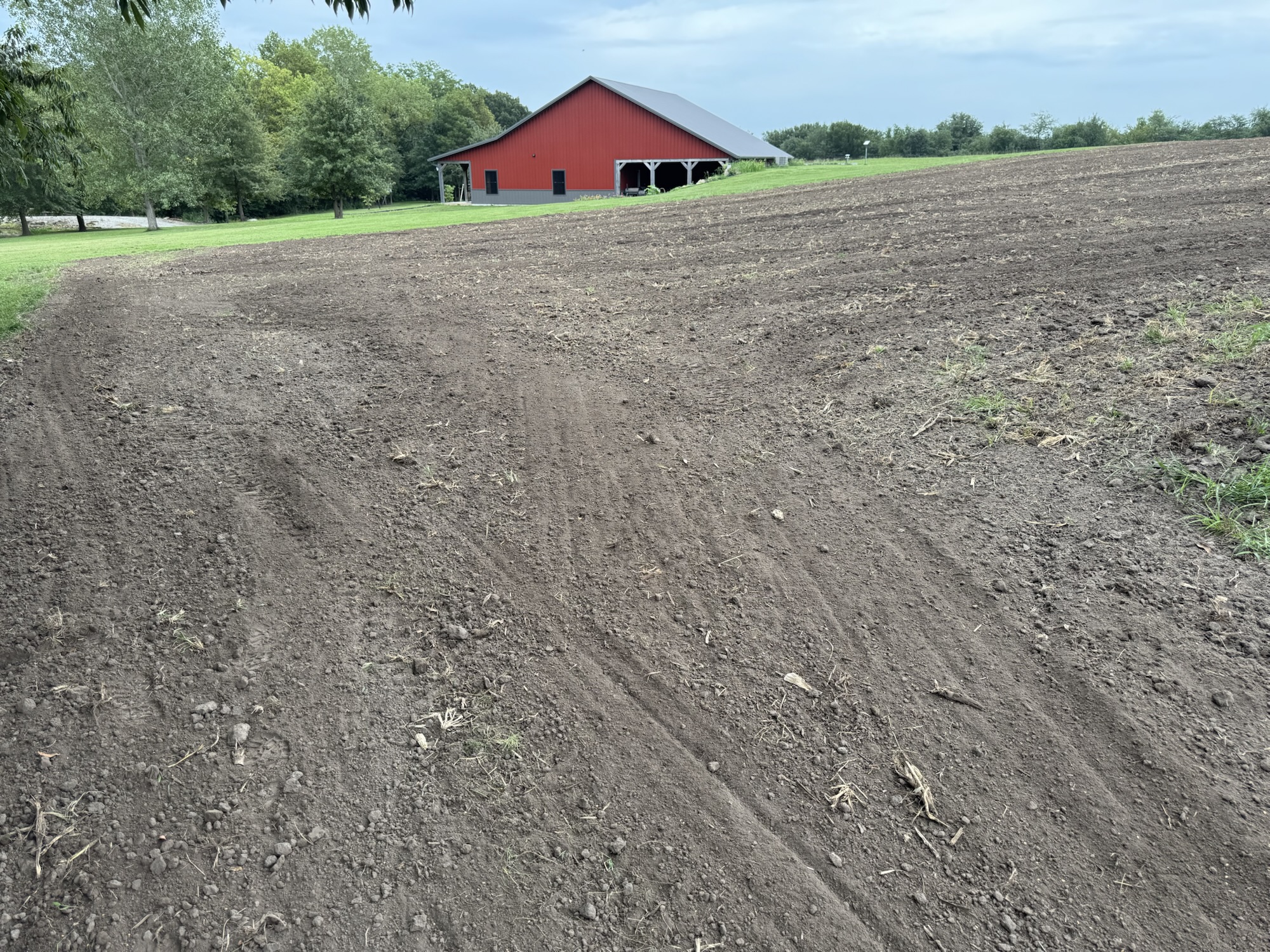
Yesterday I was broadcasting winter wheat at Pin Oaks Farm. And yes, that’s our farm that I’m talking about. 😂


We had our sweet corn patch on this 2 acres field around timber and wooded areas where I had just mulched, so I came out of the woods with my Kubota 75-2 track loader and Skid Pro brush hog mounted on the front, mulched up all of the corn stalks and let it sit for about 2 weeks, in the mid to high 90* temps. After that I came in and deep disked the corn stubble in. That has sat for about 2 weeks and got rained on numerous times, then yesterday morning I disked it again to pull up some moist soil and broadcast my winter wheat right after the disking. This old disk is heavy, but I added 4 large cement weights on top of it to help get in the ground really deep. As all of this corn and stubble breaks down, it adds even more nutrients to the soil and the winter wheat crop.


The last thing after broadcasting is to drag the field to lightly cover the wheat seeds with some nice fresh and moist soil. I’ve found with broadcasting, there will always be lots of wheat seed still on top of the dirt, but the birds can’t eat it all and most of it will still take root and grow, especially if it gets rained on, like ours did last night.
I’ve like this method for winter wheat much better than drilling it, because it’s much cheaper than having a drill sitting around to work in yearly, just to use it once each year. I can use my Fimco spreader behind our John Deere Gator UTV, and this is way cheaper than operating the tractor. For dragging, I also use the Gator to pull the cattle panels I’ve made for dragging. It’s like a harrow, but cheaper because I used 2 cattle panels, a few 2×6’s for weight at the end and some long heavy lag bolts ran down through the board and left about 3” sticking out the bottom side for dragging the soil around over the seeds.
The wheat seed I use is a cheap non certified seed, simply because I’m using it as a cover crop for next year’s sweet corn. In the spring, I will come in a spray the wheat to kill it, spread fertilizer with a light nitrogen mixed in for a good corn boost, and after the corn is about 12” high or so, then I will do another nitrogen fertilizer boost to really make the corn take off. This winter I’m building a liquid set up for my John Deere 7000 4 row planter and at planting this will allow me to add liquid fertilizer right in each side of each row so that the seeds can pull that fertilizer to them as needed. This method is far better than dropping the fertilizer right in the seed trench and possibly burn the seeds.
Moving my planter rows in to 30” rows is another bonus for several reasons. One being, more rows in the field, vs my previous 38” row widths. Second being, closer rows allows for quicker and way more shading and helps control grass and weeds much better.
The biggest job comes with the tractor rear tire width. Right now our Kubota M9960 4wd tractor is a large tractor with large fluid filled rear tires that are extremely heavy and hard to handle. Right now they are at their widest spread, so I have to remove the wheels and tires and change the center hub and wheel orientation to move rear tires inward to get my tire track in the center of my 30” rows to keep from running over corn. The front tires are spread almost perfectly, so all I have to mess with is the rear ones.


Wanna come help me with these tractor tires? Probably not, huh. 🤔
You can also find us on Facebook and YouTube.
Always do your best,
-Mike Pilcher

.
.